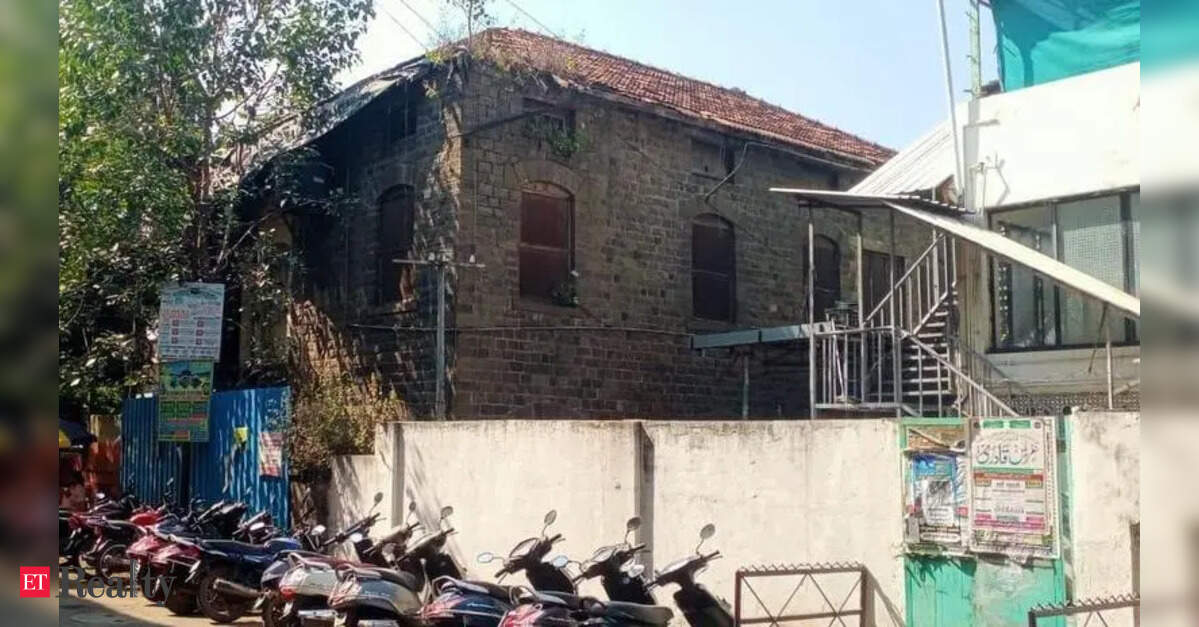
PUNE: The Pune Cantonment Board (PCB) is exploring ways to address its financial challenges by transforming its historic headquarters on MG Road into a commercial enterprise.
This colonial-era building, over 120 years old, was the administrative center for the PCB until 1988 when it was repurposed as a cantonment court.
With the court moving to a new facility in June 2024, the two-storey heritage site has become vacant. The board plans to convert this property into a source of revenue by capitalizing on its prime location.
“We have initiated the process to change the property’s purpose. The proposal has been submitted to the Principal Directorate, Southern Command, for forwarding to the Directorate General of Defence Estates in New Delhi for approval,” stated Vidyadhar Pawar, CEO of the PCB, in an interview with TOI.
Once approved, the board aims to redevelop the site into a commercial complex. Given the high foot traffic on MG Road, this project is expected to significantly boost PCB’s revenue.
The move reflects a national trend among cantonment boards seeking to unlock the commercial potential of historic properties amid decreasing revenue and rising civic service costs.
PCB officials noted the current structure is no longer safe. An engineering inspection in 2017 deemed the building unsafe.
“The wall near the traffic signal is stable, so there is no immediate danger of collapse. When we receive the necessary permissions, we will explore potential revenue-generating models for the board,” a senior official remarked.
The property, located within the Pune Cantonment—a strategically governed area—holds significant commercial potential due to its proximity to major retail outlets and transport links.
Financially, the PCB has faced pressure due to limited revenue streams and soaring infrastructure maintenance costs. Unlike municipal corporations, cantonment boards primarily rely on property tax and defense ministry grants.
Activists and former board members argue that redevelopment could provide a crucial financial boost, emphasizing the need to balance commercial interests.
Priyanka Shirigiri, a former vice-president of the PCB, stated, “We had suggested this model to the board previously. Unless the board creates its own revenue sources, it will struggle to provide basic services.”
Another board member remarked, “The board is struggling to meet even its monthly mandatory expenses. Currently, it generates around Rs 3 to Rs 3.5 crore per month against monthly expenses of Rs 12 crore. How can it survive without creating its own revenue streams?”