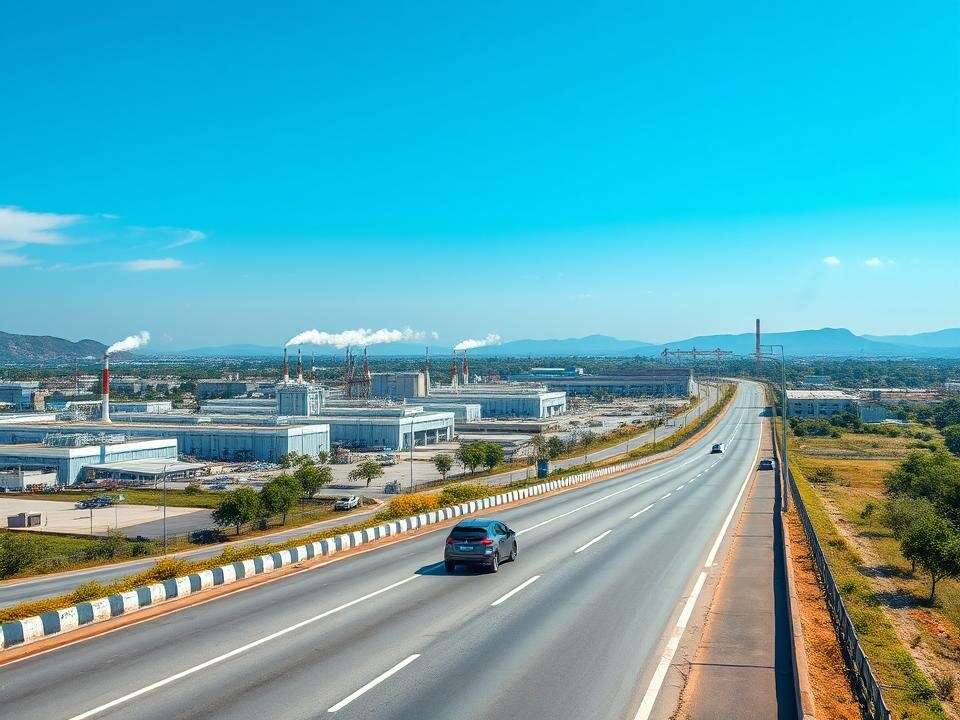
Property developers are increasingly focusing on integrated industrial townships to leverage the government’s goal of boosting manufacturing’s share to 25% of GDP by 2035. Experts suggest this shift will enhance demand for industrial plots as a viable investment option.
Major developers like M3M, Signature Global, Reliance, and LML Realty are actively creating industrial townships in the NCR. In the southern region, Brigade Group has launched Brigade Industrial Park, a 25-acre project in Devanahalli, North Bengaluru, as part of its expansion into industrial real estate.
“Much of the activity is concentrated in a few locations where infrastructure, connectivity, and execution align effectively, despite over 100 nodes planned in industrial corridors,” said Shrivallabh Goyal, CEO and WTD at Reliance Model Economic Township. “Previous townships struggled to scale beyond manufacturing hubs as they were primarily land aggregation projects. While industrial activity occurred, the surrounding housing, social infrastructure, and talent pools did not evolve concurrently.”
Reliance Model Economic Township spans 8,250 acres, serving as an integrated smart city and global manufacturing hub in Jhajjar, Haryana.
The current trend indicates a transition towards more cohesive planning, where industrial land, logistics, and infrastructure are developed together for greater efficiency and competitiveness. This change has also led to industrial real estate emerging as a promising investment, with more investors viewing these projects as stable, long-term assets.
“Government initiatives like PCPIR (Petroleum, Chemicals, and Petrochemicals Investment Region) have been crucial in driving this development,” noted Siraj Saiyed, director of Arete Group. “The Gujarat PCPIR region, particularly Dahej, showcases the benefits of large-scale, policy-driven industrial ecosystems. Over Rs 1 lakh crore has been invested in this region, which has a significant concentration of the petrochemical, chemical, and engineering industries, bolstered by port-led development and strong connectivity.”
With the growing demand for warehousing, integrated industrial ecosystems that merge manufacturing, logistics, and infrastructure are set to play a crucial role in sustaining India’s industrial growth in the long run.
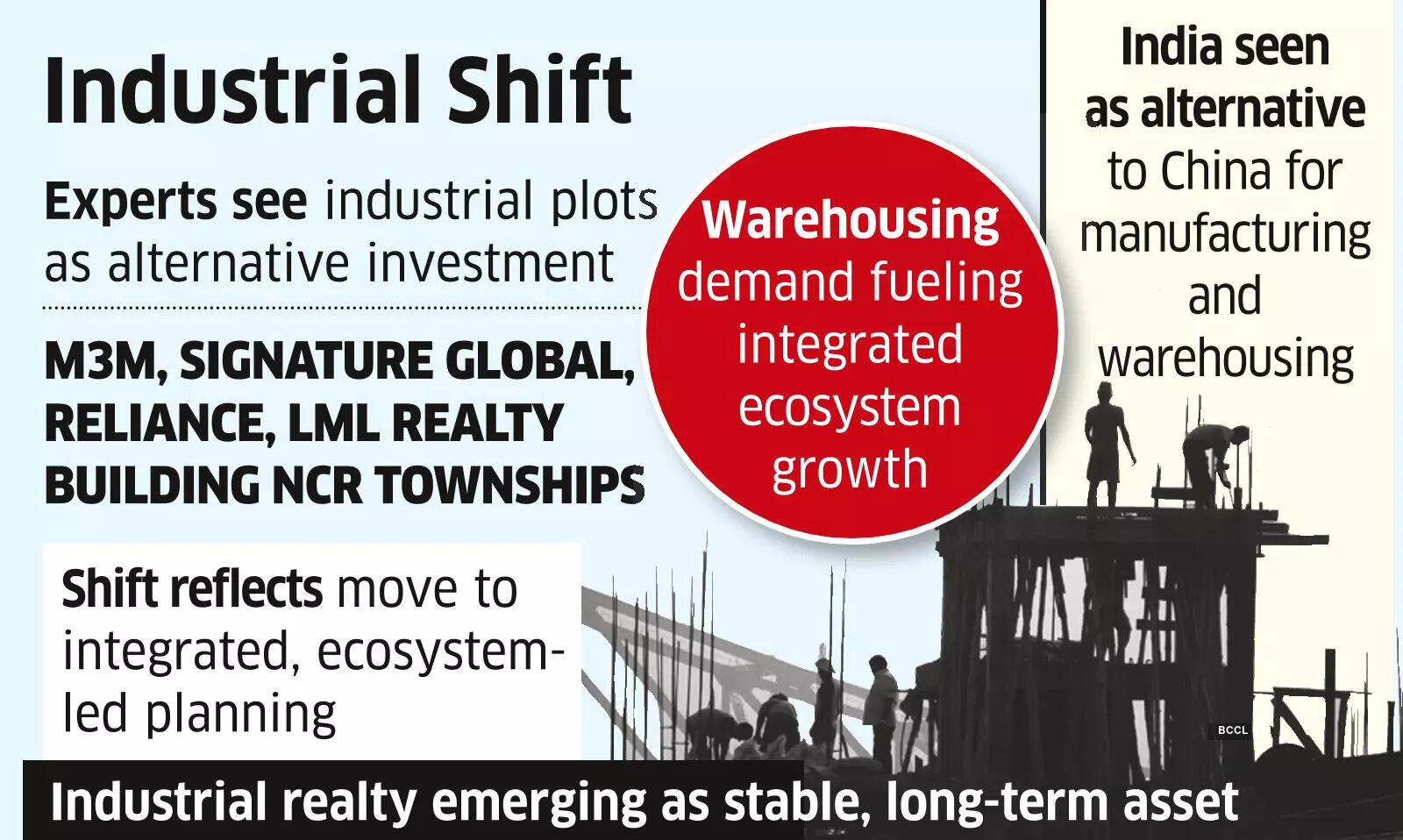
India is increasingly considered a viable alternative to China for manufacturing and warehousing, prompting a transformation in the industrial real estate sector.
“There’s been a noticeable shift in buyer behavior,” remarked Pratyush Pandey, founder of AARE Consulting (All About Real Estate). “Industrial plots are now seen not just as end-use assets but as a strong alternative investment class, driven by long-term appreciation potential and improved liquidity in key corridors. The industrial and warehousing sectors are rapidly evolving into high-growth areas.”
LML Realty is advancing its development of the 35-acre LML Industrial Park, aimed at bolstering the manufacturing and MSME ecosystem through infrastructure-driven, systems-focused industrial development.
Over the next five years, LML Industrial Park is expected to facilitate over Rs 1,000 crore in cumulative investment across more than 50 operating units, providing employment for over 7,000 individuals through both direct and indirect industrial activities.
“Sustainable manufacturing growth relies on robust systems,” stated Yogesh Bhatia, Managing Director & CEO of LML Realty. “When infrastructure, compliance, and governance are properly established from the get-go, businesses can focus on production, hiring, and scaling. This is how industrial capacity grows at a national scale.”
Recently, the Union Cabinet approved Rs 33,660 crore for the BHAVYA scheme, which outlines plans for establishing 100 industrial clusters, as introduced in the recent budget.
According to the latest report by Colliers, various cities are likely to emerge as leaders in industrial and warehousing growth over the coming decades, thanks to ongoing regulatory support through corridor development initiatives, the PM Gati Shakti program, and the National Logistics Policy.