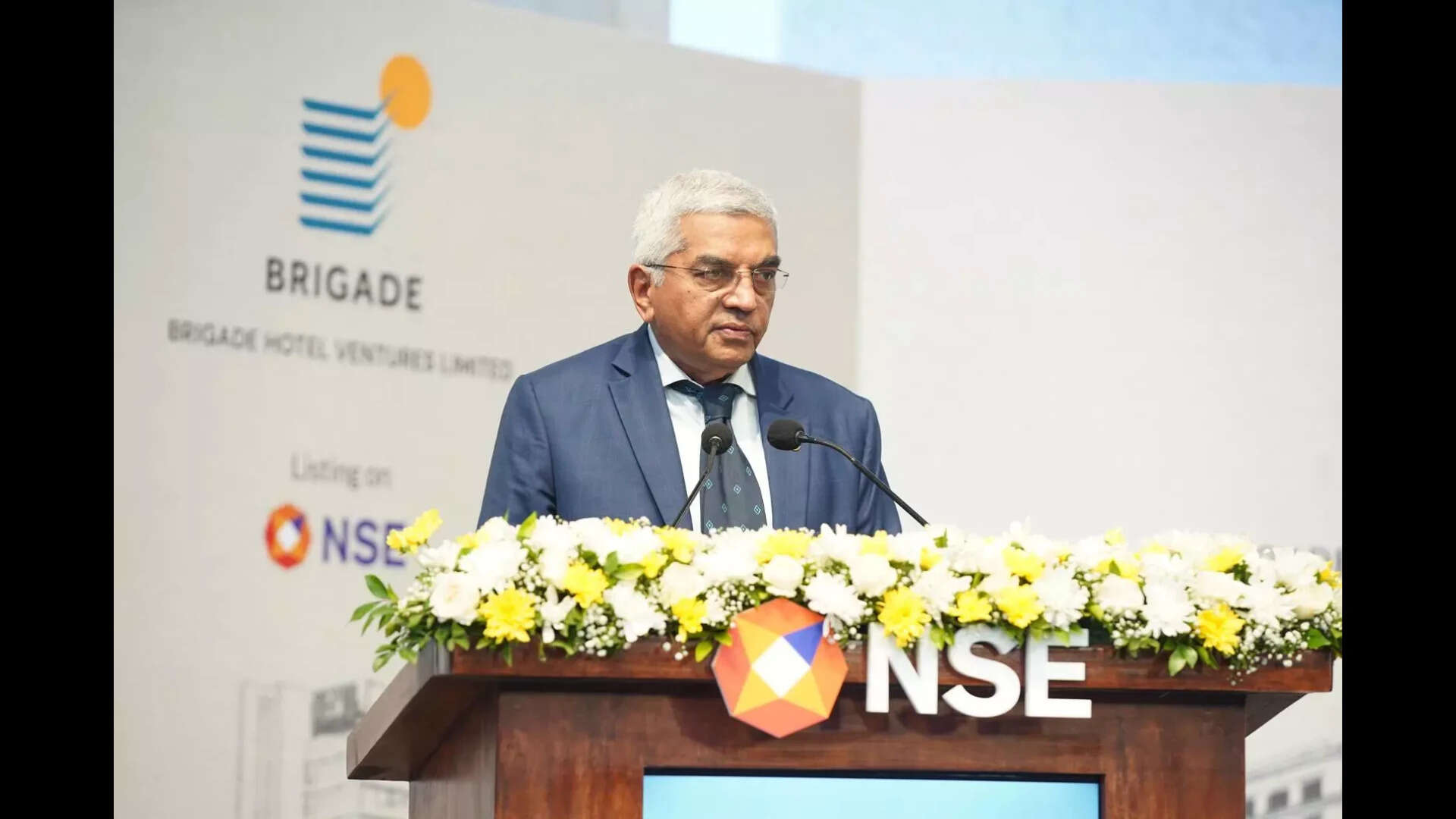
NEW DELHI: India’s residential real estate market is experiencing a robust post-pandemic uptrend, characterized by a noticeable shift towards premium offerings, enhanced affordability, and increased buyer ambitions, according to M. R. Jaishankar, founder and executive chairman of Brigade Group. However, he emphasizes that the most enduring demand lies within the mid-income and mass housing segments.
In an exclusive interview with Ankit Sharma, Jaishankar expressed optimism about the sector’s long-term trajectory, supported by rising incomes and economic growth. He stressed the necessity for developers to exercise restraint in their expansion plans and called for a reassessment of the affordable housing policy. He believes the existing thresholds are obsolete, urging the government to play a more significant role by offering cheaper land and reducing transaction-related levies for the sector to thrive. Here are edited excerpts from the interview:
In the last two years, how have you observed the real estate segment’s performance? Where do you see it headed? Is the focus mainly on premium housing, or do affordable and mid-segment markets have potential for growth?
Post-Covid, the real estate market has surged remarkably. Across the nation, barring a few exceptions, there has been substantial premiumisation. Buyers previously interested in two-bedroom apartments are now looking at three-bedroom homes, while those considering three-bedroom options are moving towards four-bedroom houses.
Overall, affordability in India has improved in tandem with the economy’s growth. With rising GDP, increasing incomes, and enhanced disposable income levels, more individuals are likely to become homebuyers in the future. Those not currently in the market may become potential buyers soon. This indicates a promising long-term outlook for the real estate sector.
Many developers are expanding into new markets like western and northern cities. Is Brigade Group considering similar initiatives in markets such as Mumbai, Pune, or NCR?
Currently, we are operating in six South Indian cities—three tier-I and three tier-II. We also have a presence in GIFT City, Ahmedabad, primarily in the office and hospitality sectors.
We’ve been fielding inquiries from Mumbai and Pune and are exploring these markets seriously. However, our focus remains on tier-I cities, particularly Bengaluru, Chennai, and Hyderabad, which still exhibit substantial growth potential and strong employment drivers. That said, we are not opposed to considering other cities.
What do you think is driving this cross-market expansion now? Does it pose a risk of over-expansion?
I acknowledge there are risks involved. The events of 2008-09 serve as a cautionary tale; many developers then aspired to become pan-India players. While it is commendable to aim high, real estate is inherently local. Hence, careful navigation is crucial.
I’m not suggesting developers should shy away from expansion. Our own growth has led us to six cities. Other developers may have the capacity to venture into nine or ten, but it’s vital they appraise their financial health, management capabilities, and overall readiness before making such decisions.
There is both ambition and pressure for consistent growth, especially for publicly listed companies that face continual demands for quarter-on-quarter advancements. However, each firm must gauge what it can realistically manage without overextending itself.
Recently, several developers have gone public. How do you perceive this increase in IPO activity within the real estate sector?
I view this trend positively. The rise in IPOs suggests an enhancement in governance standards across the sector. Being a publicly-listed entity comes with rigorous compliance obligations dictated by stock exchanges, the Registrar of Companies, and independent directors, prompting firms to improve their governance practices.
Moreover, access to public capital is crucial for developers aiming to accelerate growth. As land prices have surged, it is increasingly challenging for firms to rely solely on internal funding for expansion. Thus, better access to capital markets is both logical and beneficial for the industry.
Many listed developers are focusing on premium housing due to higher margins. What implications will this have for affordable and mid-income homebuyers if the supply skews heavily towards high-end properties?
This is a critical concern. I do not support the notion of developers focusing exclusively on larger, more expensive units. While premium offerings have their place, it’s important to remember that the demand for them is limited to around 10%-15% of the market.
The bulk of demand exists within middle-income and affordable housing segments. In cities like Chennai, Bengaluru, and to a lesser extent Hyderabad, much of our inventory falls within the ₹1 crore to ₹2 crore price bracket, which is still regarded as high-end in southern cities, whereas in others, it may be viewed as more mainstream.
Additionally, the official definition of affordable housing has become outdated. The current upper limit of ₹45 lakh was set years ago. Given inflation and increasing land and construction costs, I believe the threshold should be updated to at least ₹75 lakh.
The industry, alongside CREDAI, has been advocating for this revision, but progress has been slow. For meaningful growth in affordable housing, a more substantial government role is essential. Affordable land availability and reductions in taxes and charges are paramount. Presently, levies such as stamp duties, GST, and various municipal fees account for up to 40% of the total value in many projects, and in affordable housing, this proportion can be even higher.
Hence, simply expressing commitment to encourage affordable housing is insufficient; tangible policy support is vital.
RERA was a major reform for the sector, yet there are discussions about the need for a review. Do you think it’s time to reassess RERA?
Absolutely, it’s high time to revisit RERA and evaluate where the framework could become more user-friendly for both consumers and developers. Both sides have valuable perspectives and concerns.
While we support RERA and its objectives, improvements to the rules and processes are welcome as long as they maintain a fair balance between all stakeholders. The developer should act as a steward of the customer’s investment, which often represents their life savings. Conversely, consumers and regulatory bodies should recognize the challenges developers encounter, from land acquisition to project approvals, construction, and handover. This process typically spans several years and can present numerous challenges, both internal and external. Acknowledgment of these realities is crucial, especially when developers demonstrate genuine intent.
How did FY26 fare for Brigade Group in terms of revenue and sales, and what are your anticipations for FY27?
FY26 posed profitability challenges for us, yet it was a successful sales year. The primary obstacle was delays in approvals affecting several projects. As we approach the fourth quarter, many of these approvals are coming through.
Thus, we expect FY27 to be a highly productive year for Brigade.
What were your targets for FY26, and what are your goals for FY27?
Our sales target for FY26 was approximately 8.5 million sq ft. Although we may fall slightly short, profitability remains robust. For FY27, we aim to achieve sales in the range of 9 to 10 million sq ft.