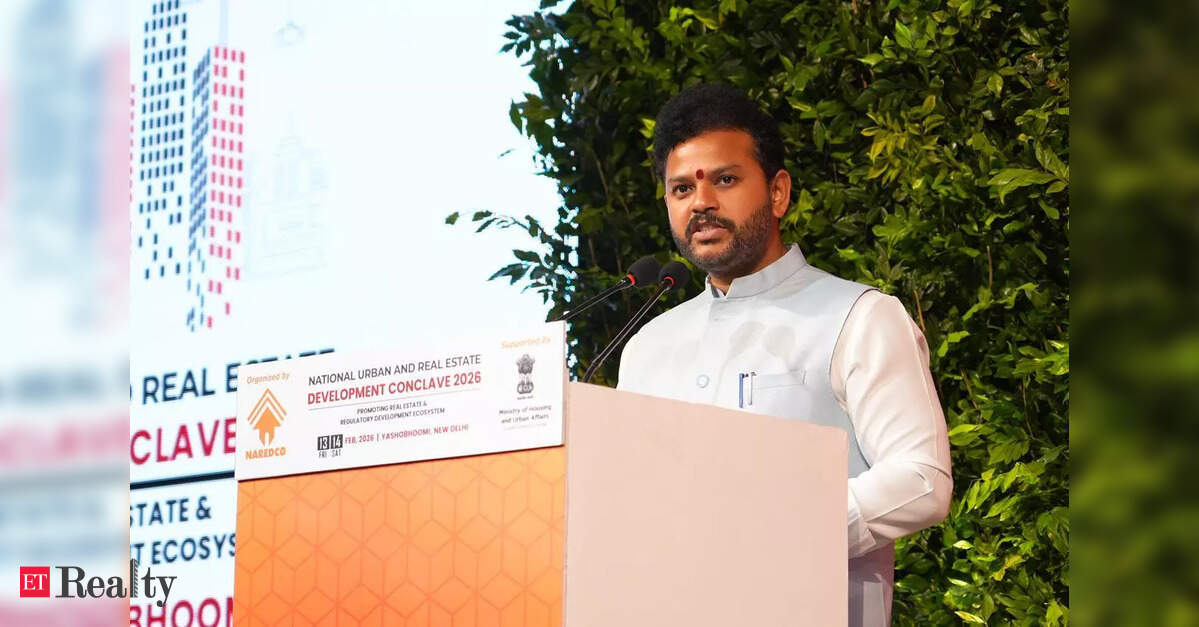

NEW DELHI: The civil aviation ministry is conducting an analysis on potential adjustments to height restrictions for real estate developments, with the aim of facilitating quicker vertical growth in urban areas where land is limited, Minister Kinjarapu Ram Mohan Naidu announced on Friday.
He stated, “The Indian real estate market is projected to reach USD 1 trillion by 2030, driven by structural reforms, enhanced transparency, and increased investor confidence. It has the capacity to grow to USD 5-7 trillion by 2047.”
Naidu was addressing attendees at the National Urban and Real Estate Development Conclave-2026 held in New Delhi.
He highlighted that horizontal expansion in housing and construction will face constraints in the coming years due to space limitations, emphasizing the necessity for vertical growth, which will require regulatory adjustments from the government.
The minister mentioned that an extensive study is being undertaken by an external agency, and its findings will influence future modifications in the regulatory landscape. However, he did not specify the potential changes.
Naidu also projected significant growth in airport infrastructure, anticipating the addition of nearly 50 new airports within the next five years, potentially bringing the total to 200 airports over the next two decades. He noted that such expansion would have positive ripple effects on real estate, construction, and housing sectors.
Additionally, Naidu emphasized the urgency to promote rental housing, as preferences are shifting globally, and India’s youthful demographics are increasingly open to rental options.
Tokhan Sahu, Minister of State for Housing & Urban Affairs, pointed out the need for proactive measures in the affordable housing sector, which continues to encounter various challenges.
Parveen Jain, President of NAREDCO, stated that the real estate and construction industries require supportive policies.
Niranjan Hiranandani, Chairman of NAREDCO, remarked, “Urban India currently accommodates nearly 37% of our population, contributing around 65% of our GDP. By 2047, over half of India will be urban. The question we face is straightforward yet profound: will we allow urbanization to unfold naturally, or will we strategically guide its development?”