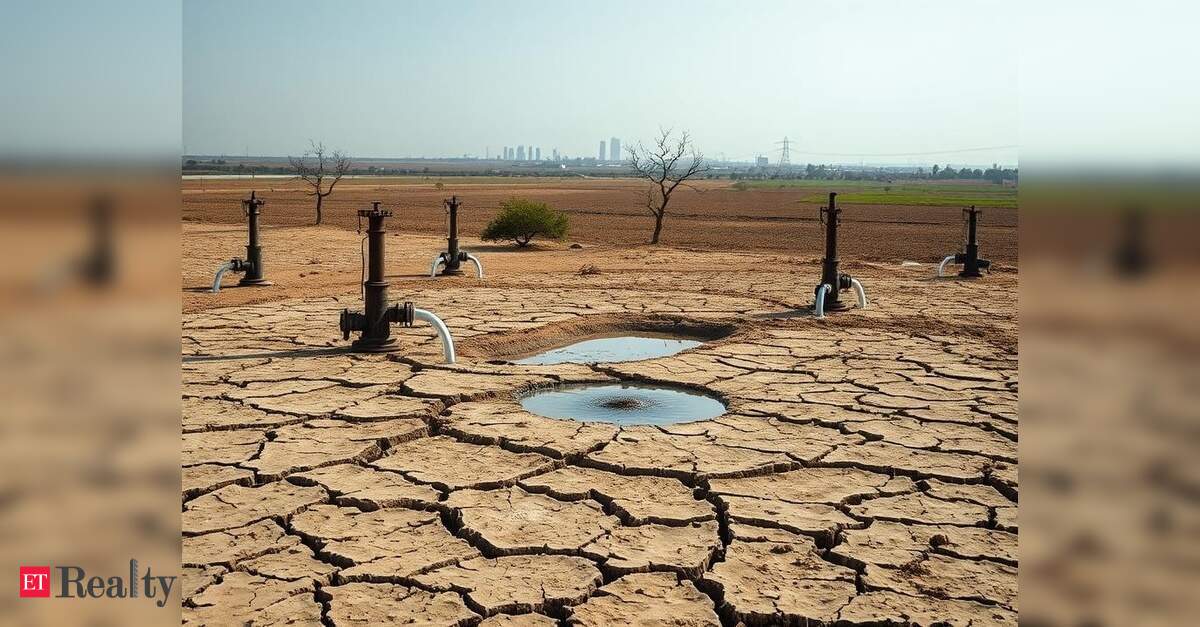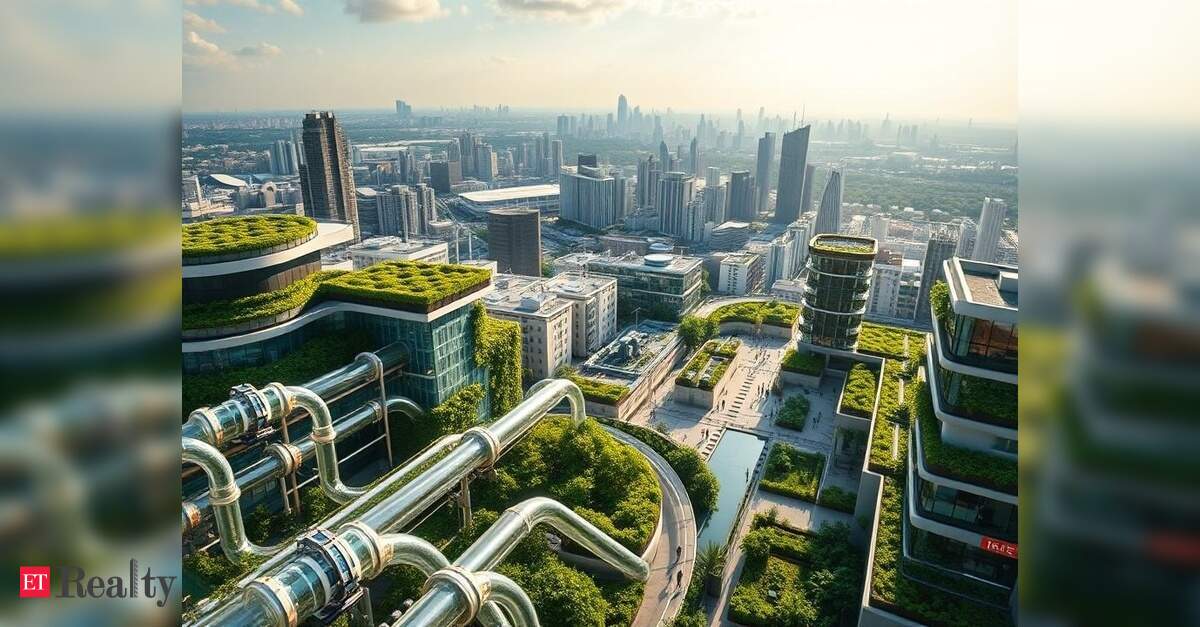
NEW DELHI: The Economic Survey 2025-26 highlights a new economic opportunity within India’s evolving urban environment: the circular water economy. Addressing the escalating freshwater scarcity, the survey contends that the conventional “use and dispose” model is untenable for a quickly urbanizing nation. It recommends a paradigm shift towards viewing wastewater as a vital urban resource, which has the potential to create a market valued between ₹2.4 lakh crore and ₹3.2 lakh crore by 2047.
The report emphasizes that reusing Treated Used Water (TUW) for non-potable applications like industrial cooling, construction, and landscaping could lead to more than one lakh job opportunities. Additionally, optimizing existing treatment capabilities could release sufficient freshwater to irrigate an area nine times the size of Delhi.
Transforming the “use and dispose” mentality
Despite this potential, there remains a significant infrastructure gap. A CEEW study of 503 cities revealed that 82% either fail to reuse treated water or lack operational infrastructure. Currently, urban India produces 112 billion liters of wastewater daily, but only 28% is treated, with merely 8% of that being recycled for reuse.
To tackle this issue, the survey proposes a “phased and outcome-oriented approach”:
Infrastructure integration: Expand wastewater treatment capacity alongside reuse networks rather than treating them as distinct objectives.
Industrial partnerships: Securing long-term purchase agreements with industrial clients can stabilize the circular economy’s viability.
Incentivized pricing: Offering TUW at lower rates for commercial entities compared to municipal freshwater could facilitate a smoother transition.
A multi-billion Rupee investment opportunity
To achieve 100% sewage treatment by 2047, a substantial capital investment of approximately ₹1.5 lakh crore to ₹2.3 lakh crore in technology will be necessary. The survey identifies the ‘Jal hi Amrit’ initiative under AMRUT 2.0 as a vital driver, showcasing 860 sewage treatment plants (STPs) across 402 cities that have begun the assessment process.
For developers and investors, the message is clear: urban “liveability” is fundamentally tied to water security. By implementing decentralized treatment and reuse systems at the neighborhood level, Indian cities can convert waste challenges into a sustainable growth engine.